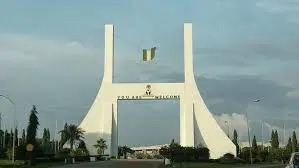
Most of the FCT was a very extensive land, where natural habitat had never been disturbed right from the prehistoric era. Thus, prior to the advent of the FCT, all the known and unknown natural flora and fauna existed in abundance. Generally, the natural vegetation of the Capital City is characterized by park savanna. Riverine depressions are typically skirted by fringes of thickets and high trees. There were occasional patches of forests or heavily wooded areas.
In our childhood days, prior to 1976, we used to accompany our parents to Kuje and Wuse to chop tall mahogany, iroko and other trees for our sawmilling industries located in Suleja, the original Abuja Town, which was the major urban center in the region.
Grievances of displacements from indigenous settlements were not only made by the original Abuja inhabitants, even the natural fauna resisted their displacement before being overpowered by the City development. There were many stories of encounters with both the harmless and ferocious wild animals by the pioneer inhabitants of the new Abuja City, in the first houses constructed in Garki and Wuse Districts.
Malam Suleiman Gora was among the civil servants who were hitherto living in caravans temporary allocated as their houses in Suleja and subsequently got allocation to start living in the first government houses built in the Garki District. Those were days when they never leave their widows open. Otherwise, their rooms would be invaded by snakes from the nearby bushes. Recounting one of his unforgettable experience, he said there was a time that he was almost bitten by a snake as he returned from work. He said he quickly swung the door which served as his shield, and the fangs landed on the door as the snake stroke.
Another episode was when they were on transit between Garki and Wuse. One of their colleagues felt pressed. They parked to allow him enter the bush. Unfortunately, he mistook a python’s head for a stone. He climbed on top and started easing off. He was violently thrown off. We can imagine how he ran out of the bush half naked, with faeces trailing. However, some Tiv palm wine tappers witnessing the incident, trailed the prints of the python. Killed it for their meal and sold the skin to some touring white men.
Another incidence was narrated by another of our retired colleague, a surveyor. They stopped on the old Nyanya road, on their way back from a site. A lion came out from the bush and continued to circle round their land rover. When it could not have access to them it returned to the bush.
The 82 years old Prof. Ologe, who was the Unsung Hero of our article, two weeks ago, had his own incident also. He titled it “The Bridge was gone and we were on the wrong side of the river.”
He narrated that, on a certain day, they went to work in the southern part of the FCT. They finished around 4pm and headed back towards Abuja (Suleja), where their base was, looking forward to having a hot bath and dinner before collapsing onto their beds for the night. They never knew that their rests were going to be postponed for several hours?
When they reached River Usuma at Gwagwalada they discovered that the bridge they crossed in the morning was gone. They became stranded on the wrong side of the river. They saw many other North-bound travelers who were also stranded. They gathered that it was the Public Works Department that decided that the bridge was no longer safe to use and, without warning to road users, had dismantled it!
They began to think of how they could possibly get back to Abuja (Suleja) that night. After studying maps, they discovered that it was possible to go through Nasarawa and Keffi to Abuja, provided the roads were motorable, especially at night. After confirming that they had enough fuel in their vehicle, they decided to risk that circuitous route.
They drove back to Abaji (54km), to Loko (20km), to Nasarawa (71km), to Keffi (40km); and from Keffi to Abuja(Suleja) -85km, making a total of 270km. A distance that would not have been more than 50km. All of that was on rough laterite roads. They got to their base late into the night, much to the relief of their Project Coordinator, the late Prof. Akin L. Mabogunje, and the other colleagues.
That experience happened about 48 years ago, but remains fresh in his memory.
Such were the characteristics of the adventures by the resource personals who applied their technical knowledge to propose where to place activities in Abuja in order to have a befitting Federal Capital City (FCC) by all international standards.
Obviously, there was abundant wildlife in the Abuja sub-region in which Nigerians did not need to spend their resources for site seeing in any foreign land to see the “big six”, as they are called in Nairobi, Kenya: lion, cheetah, elephant, rhino, buffalo and giraffe. The foreigners would therefore come to Nigeria, while we earn the hard currencies.
In order to harness these potentials, the Ecological Survey Team proposed the establishment of the Bobo Wildlife Park. It was such a site survey adventure that led them to become caught at the wrong side of the bridge. Unfortunately, the proposal has now been violated, with mass housing development at the site earmarked for the Wildlife Park.