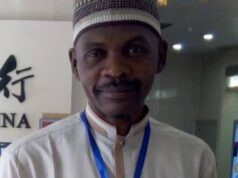
By TPL Umar Shuaibu
All the various arms of the FCT Administration have their specific responsibilities. The system has its inbuilt mechanism for checking abuse. Going by the laid-down procedures, any distortion of the Abuja Master Plan could easily be traced to the department responsible. In land matters, five departments are key: Urban and Regional Planning (URP), Lands, Development Control, AGIS, and Surveys and Mapping.
As the custodian of the Abuja Master Plan, the URP supervises all designs for the city’s districts. To prevent abuse and distortions, requests for land allocations are routed through the URP department to regulate land use and sizes. Depending on the nature of the request, applicants must submit schematic designs and environmental impact assessments for proposed developments.
To uphold the principle of land use zoning, requests for residential, commercial, industrial, or recreational land are assigned to designated areas in the master plan by the URP department before recommendations are made to the minister for approval. In cases where allocations are made in contravention of the plan, the Development Control Department has the power to enforce compliance before granting development permits.
Furthermore, in the process of obtaining building plan approvals, residential designs must align with the specific density requirements of the allocated plot. These submissions are sent to the URP for verification, and to the Lands Department to confirm ownership and prevent conflicts before physical development begins.
To ensure equity in land distribution, the FCT Administration sets limits on land allocations. For urban areas, the maximum allocation is 10 hectares for housing estates or comprehensive developments, while regional or area councils have a 20-hectare cap. For individual residential plots, except for special residential allocations of up to 3,000 square meters, the maximum is 2,500 square meters.
Unfortunately, this regulation is being violated with impunity under the current FCT Administration. While past administrations had instances of abuse, the scale of violations under Nyesom Wike’s tenure is beyond comprehension.
Outrageous and mind-boggling land allocations are now the norm. The Abuja land market is flooded with plots advertised for sale under the guise of mixed-use or comprehensive developments. One particular plot sighted was over 300 hectares, with an asking price of 100 billion naira.
Many of these speculated lands are in Guzape II and Maitama II. For strategic or security reasons, some of the most questionable allocations have key details—such as file number, plot number, and beneficiary name—obscured. However, these details are reportedly made available to agents with serious buyers for verification.
A notable example is a plot in the Central Area District, earmarked as a transportation corridor, which is now fenced—an indication that it has been allocated under Wike’s administration. Since the city’s inception, no previous administration tampered with this land due to its strategic importance. Its sudden allocation coincides with the abrupt removal of the URP Director, a well-respected professional known for his adherence to regulations. His removal suggests that he was seen as an obstacle to violations of the master plan.
The respect given to certain strategic lands by 15 previous ministers before Wike should not be disregarded. Lands reserved for critical city projects should not be arbitrarily reallocated. The minister, who has traveled abroad and experienced world-class metro services, should recognize that his actions could permanently deny Abuja such vital infrastructure. His conscience should remind him that posterity will never forgive him.
It must not be forgotten that Abuja’s indigenous people sacrificed their ancestral lands for the national interest. Yet, while billions of naira are illicitly made from these lands through administrative cover-ups, the original landowners remain in abject poverty. If Nigeria must progress as a nation, leadership must be entrusted to those who are trustworthy—not the other way around.